Christophe Barraud interprets the divisions in global growth for the MEB
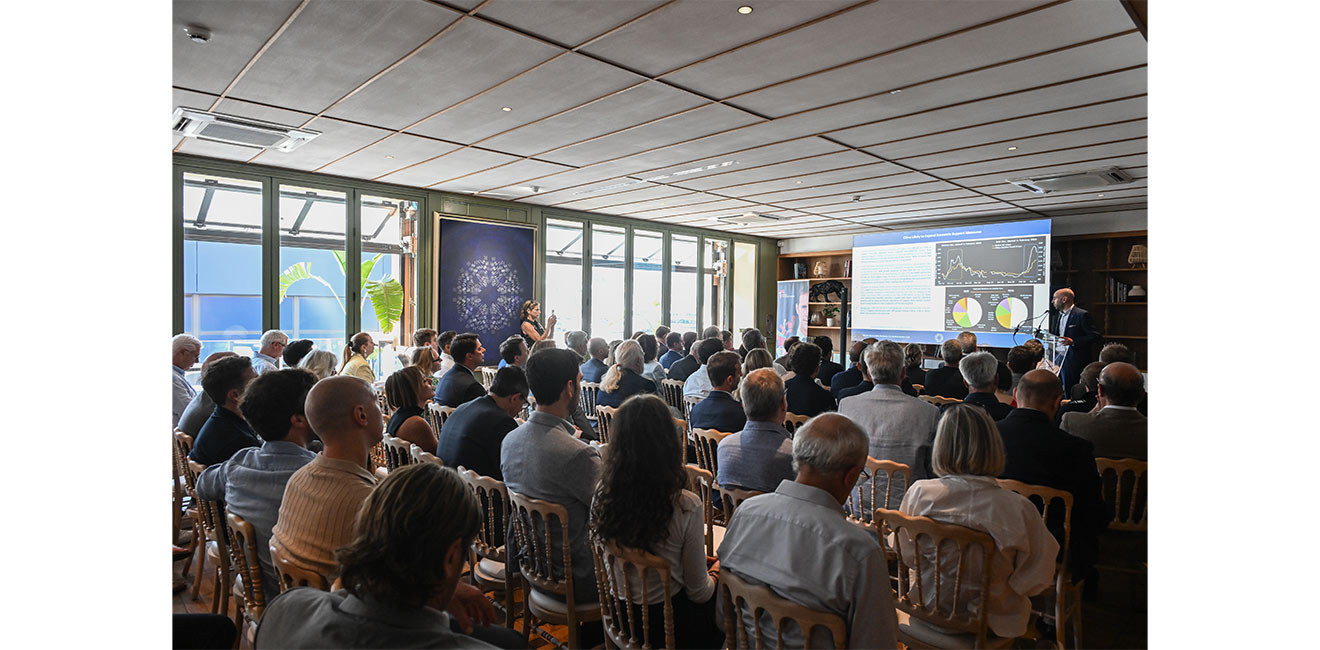
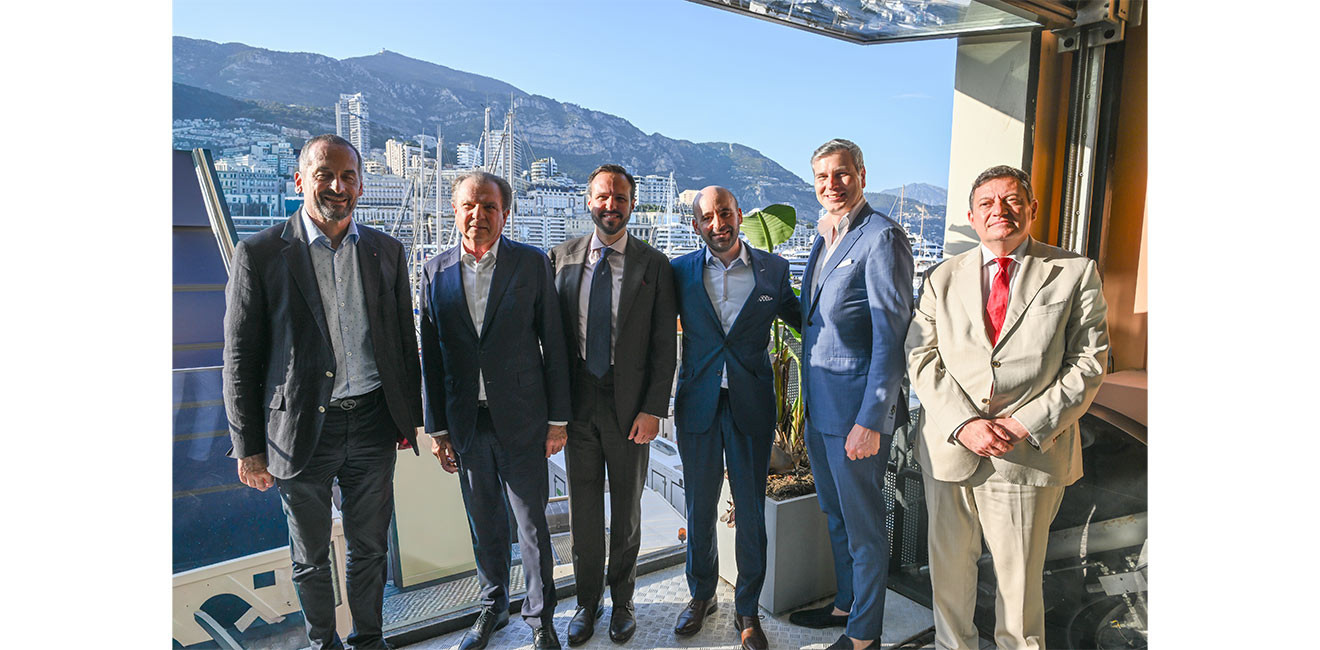
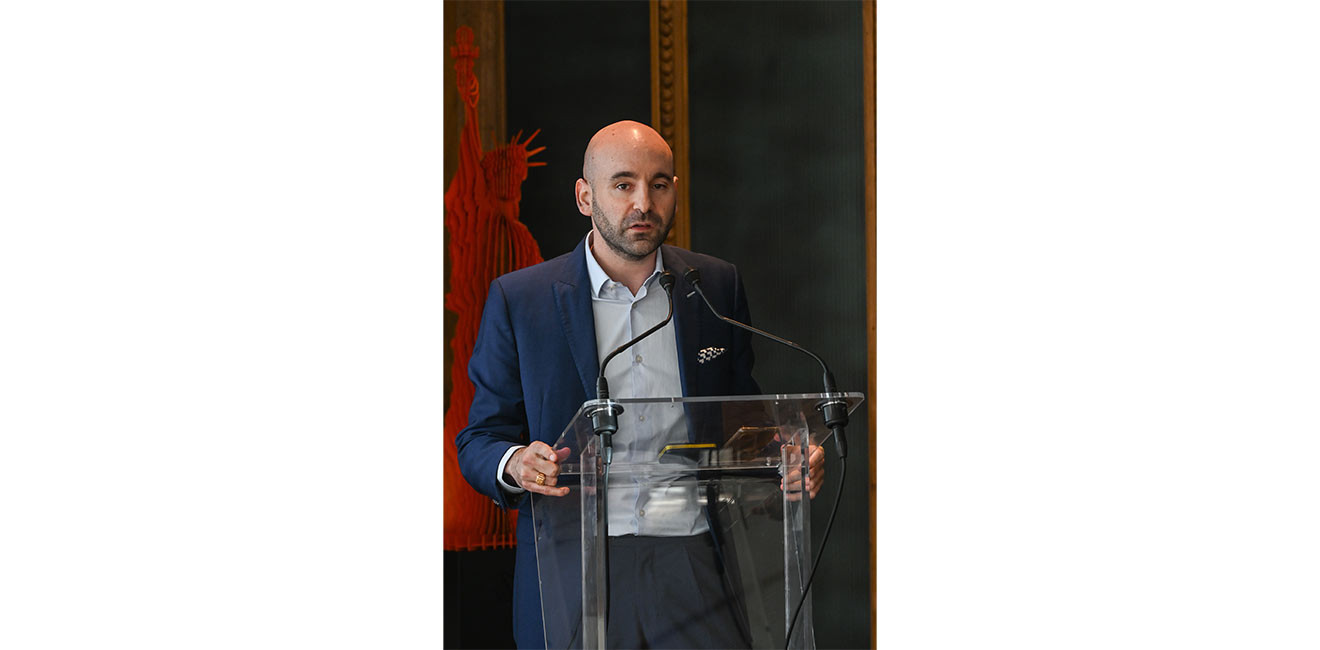
On Tuesday, 26 May, at the Marius restaurant, the Monaco Economic Board (MEB) hosted another top-tier global economic outlook conference with award-winning forecaster Christophe Barraud, Head of Discretionary Portfolio Management and Research at Lior Global Partners. This annual event, highly anticipated by the financial community and entrepreneurs in the Principality, was further enhanced by the valuable support of EFG Bank Monaco.
In his welcome address, Michel Dotta, Chairman of the MEB, noted that Christophe Barraud has been ranked multiple times as the world’s leading forecaster by Bloomberg for his three preferred regions (the United States, the eurozone, and China). Meanwhile, Matteo Mescolini, Chief Executive Officer of EFG Bank Monaco, also took the floor to commend the speaker’s expertise and reaffirm his institution’s commitment to the Principality’s business community.
In his introduction, Christophe Barraud described a world increasingly marked by fragmentation across economies, monetary policies, and fiscal trajectories, coupled with significant geopolitical, political, and climate uncertainties. These factors inevitably weigh on global activity. Projections indicate a slowdown in worldwide growth, which is expected to reach 2.8% in 2026—down from 3.4% the previous year—marking its first fall below the 3% threshold since the COVID-19 crisis.
Christophe Barraud then presented his forecasts for the three major global economic powers he researches daily, highlighting markedly divergent dynamics.
The economist began with China, a region he “particularly favours because the data are difficult to obtain, but also because it is where the most activity is taking place”. After a first quarter showing of 5% growth, this remains on fragile foundations—primarily due to a transient boom in the financial sector and in industrial production geared towards exports. Domestic Chinese consumption is slowing down amid the ongoing property market crisis.
To offset this slowdown and counter Western trade barriers, Beijing is orchestrating a major strategic shift within the framework of its five-year plan. The government is injecting record liquidity (with a combined real deficit above 9% of GDP) to steer its economy towards technological self-sufficiency and high-value-added sectors such as semiconductors, artificial intelligence, and electric vehicles. Mr Barraud forecasts Chinese growth of 4.6% for 2026.
Despite uncertainties, the US economy is expected to avoid recession in 2026, with growth forecast at 2.2%. This momentum is supported by several factors, including the extensive fiscal stimulus initiated by Donald Trump (the One Big Beautiful Bill Act), spending by the wealthiest households, and ongoing large-scale investments in artificial intelligence, which serve as a vital engine of growth.
The economist, however, tempers this view by highlighting a “K-shaped” recovery, characterised by diverging trajectories. While stock indices reach record highs, households with lower incomes are experiencing greater financial hardship, as evidenced by a rise in consumer credit defaults. Average inflation is projected to reach 3.4%, limiting the Federal Reserve’s scope for manoeuvre on a rate cut this year.
Europe seems to be the region most affected by the international situation. Hard hit by rising energy prices due to tensions in the Middle East and by the implementation of US tariffs, the eurozone faces the threat of stagflation.
This is reflected in a slowdown in activity, particularly in the services and hospitality sectors. Additionally, banks' tightening of credit conditions hampers business investment. With inflation expected to rise to 3.1% in 2026 (primarily driven by energy costs) and sluggish growth revised down to 0.5%, Europe remains at risk of a technical recession.
Following the presentation, the audience had plenty of questions, particularly about China, which receives less media coverage but appeared to especially interest the more than 90 decision-makers present. This suggests a successful economic mission, as the MEB will be visiting there this autumn.
Finally, the evening concluded with a networking cocktail, during which attendees had the privilege of engaging directly with the day’s guest — an expert with remarkable technical knowledge, capable of making the complexities of the economic world accessible in an equally remarkable way.
--------------------------------
Press contacts: Benoît Ulrich / Delphine Quilichini – presse@meb.mc
Photo credits: Sébastien Darrasse / MEB