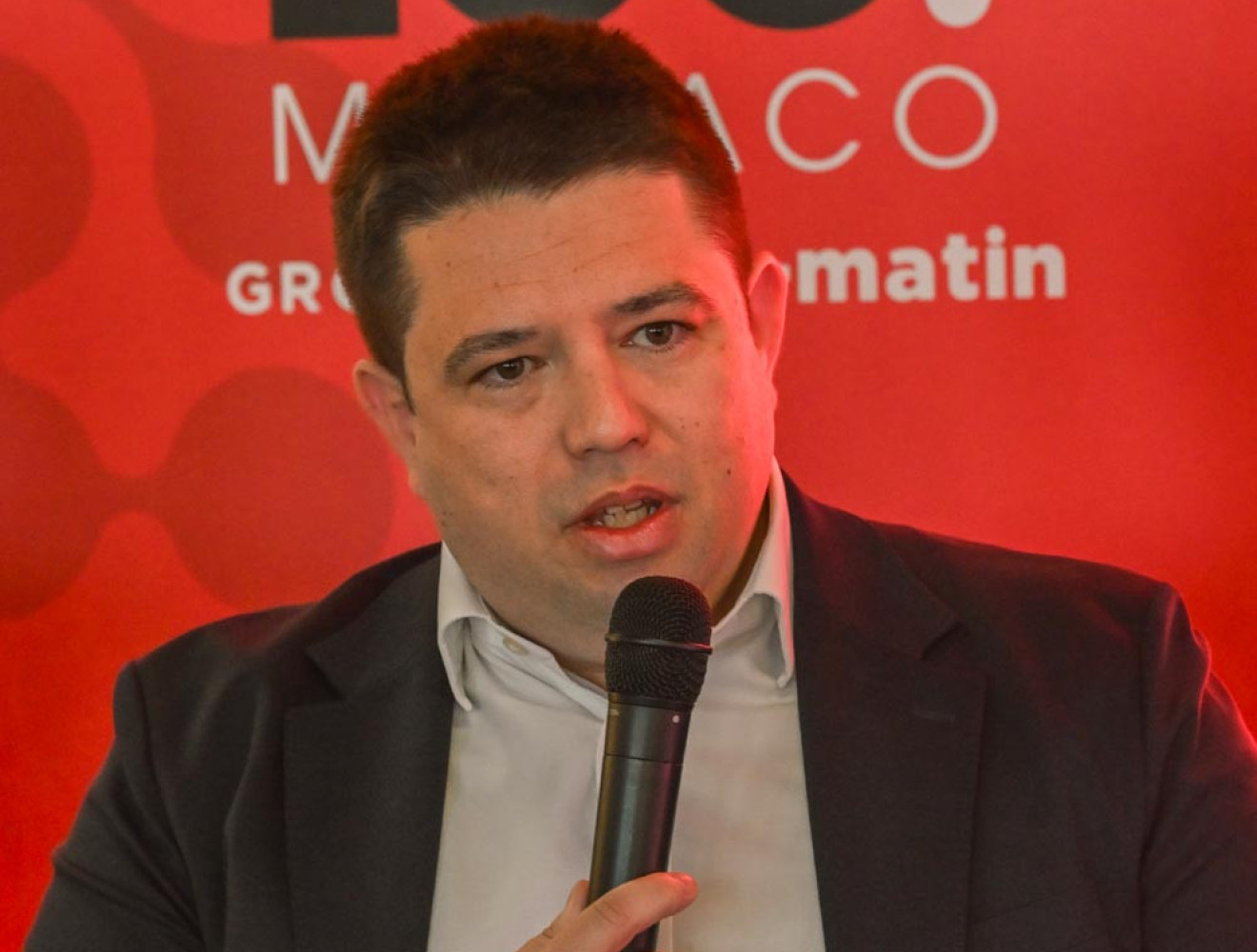
Club Eco Monaco: explaining the challenges of departing from the FATF grey list
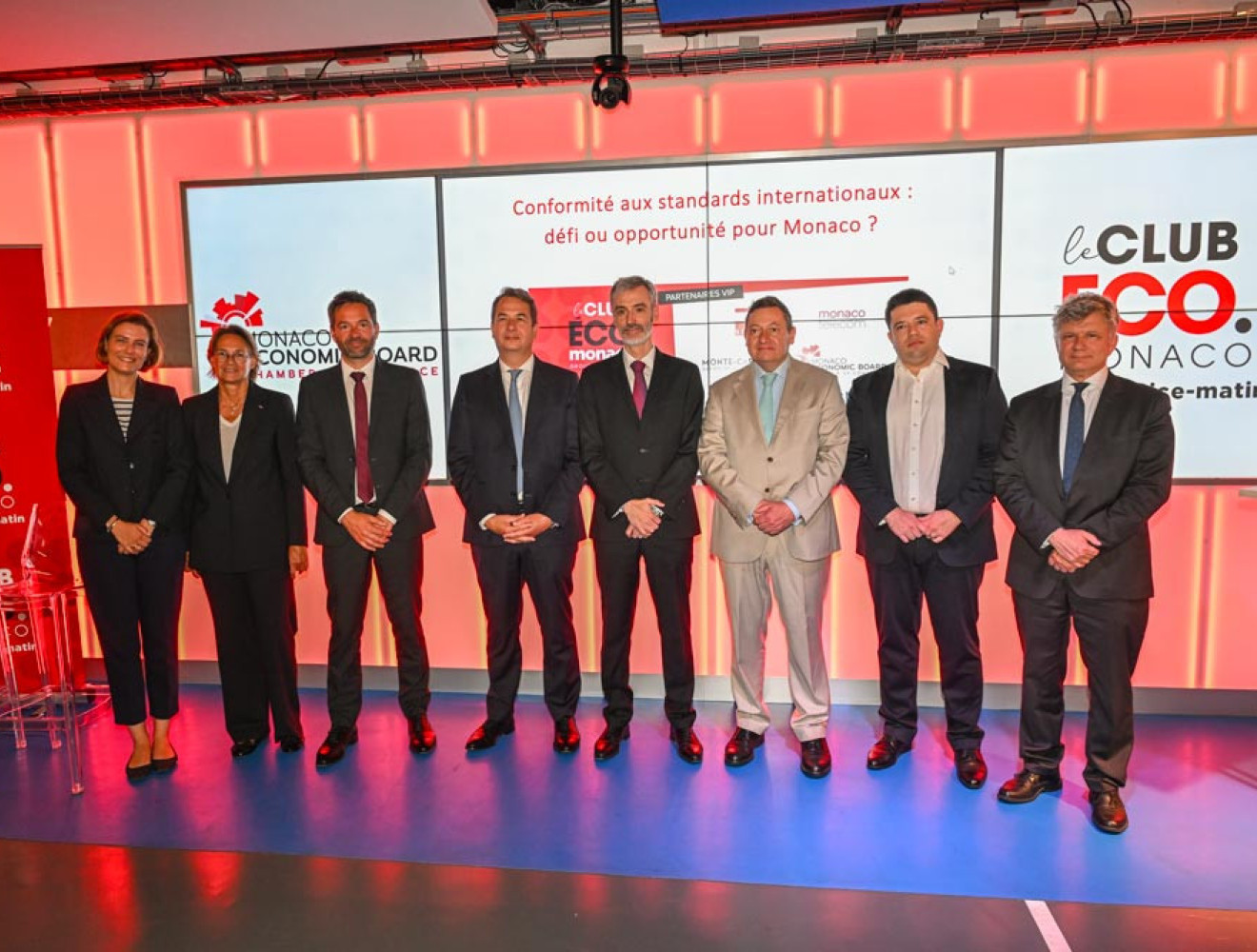
On Friday, 22 May, a Club Eco Monaco conference, organised jointly by the MEB and the Nice-Matin Group, took a pedagogical look at the actions implemented as part of the Principality’s “enhanced monitoring” by the Financial Action Task Force (FATF). What risks, prospects and opportunities does this entail? Institutional representatives and economic stakeholders answered this strategic question frankly.
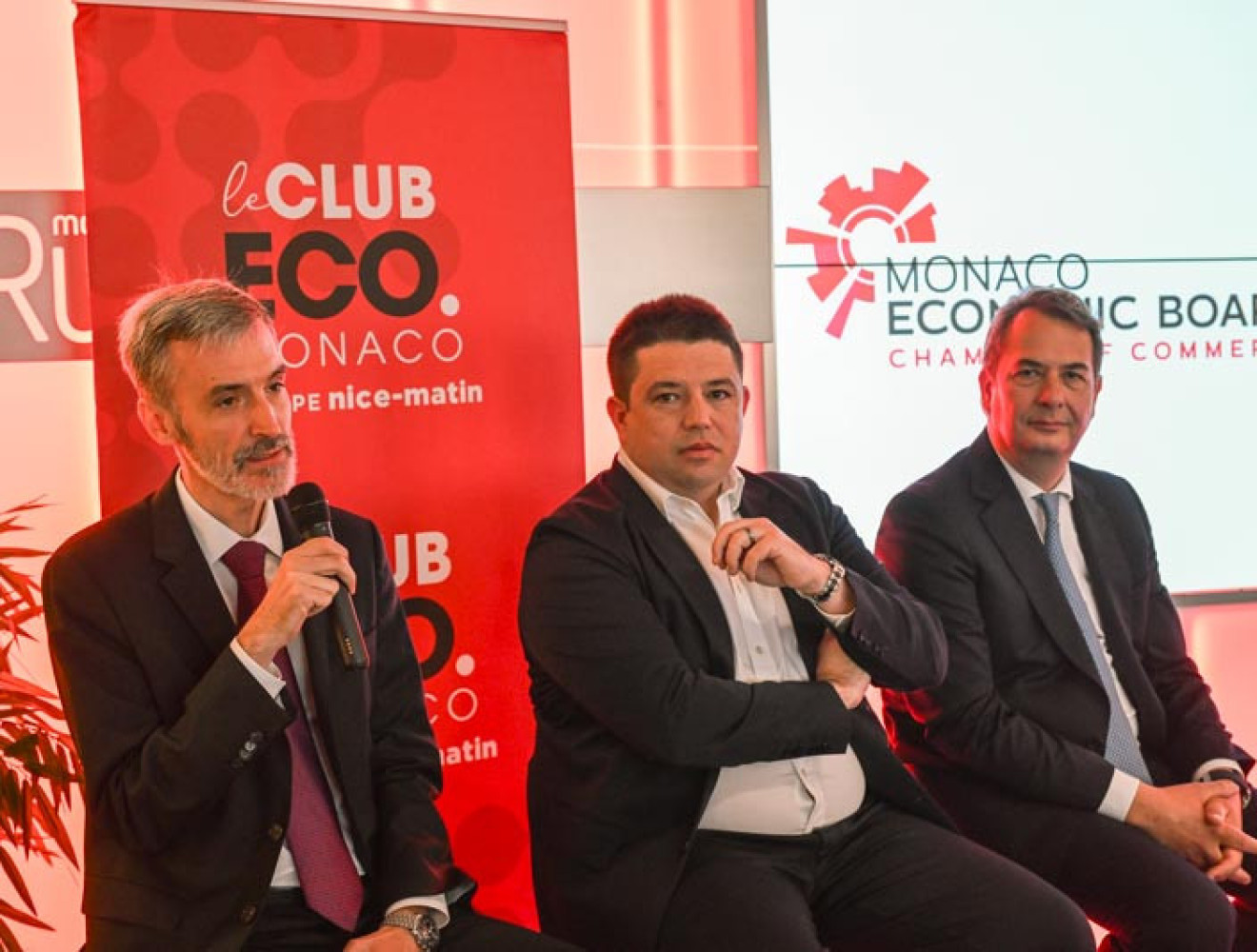
To address such a technical yet important subject, a high-level panel was convened: Mr Frédéric Cottalorda, Government Counsellor and Minister for Finance and the Economy; Mr Frédéric Chartier, Executive Co-ordinator of the Steering and Monitoring Committee for the national strategy to combat money laundering, terrorist financing, proliferation of weapons of mass destruction, and corruption; and Mr Olivier Pagès, Chief Operating Officer of CMB Monaco.
Following an introduction by Guillaume Rose, the CEO of the MEB, Baptiste Bize, Editorial Director of the Nice-Matin Group, initiated the discussion on “a sensitive subject that fuels all kinds of fantasies”.
Frédéric Chartier recalled the Committee’s missions, which involve guiding, coordinating, and evaluating the Principality’s financial compliance and security framework. He emphasised that this mission is part of a long-term process and extends beyond merely monitoring Monaco’s removal from the FATF list. Currently, however, relations with the Moneyval experts take precedence, and the Principality’s efforts are beginning to bear fruit: “Today, out of 40 technical compliance criteria, Monaco has achieved a score of 39 out of 40.”
These positive results have necessitated improvements in methodology concerning certain risks, along with increased human and technical resources and stronger international cooperation against money laundering. In total, approximately ten improvement measures were scheduled under the FATF timetable. Two are still being implemented: administrative sanctions and criminal sanctions, both of which are effectively the outcomes of the compliance process.
When asked about a potential future removal from the grey list, Government Counsellor-Minister Frédéric Cottalorda confirmed that the Principality has tangible results to report regarding recent actions. The rise in convictions and the accompanying communications are the most concrete proof. This legal framework is the result of intensive legislative work carried out in close cooperation with the National Council, which has provided all parties involved with a clear basis for action.
Olivier Pagès thus testified to the efforts made by the banking sector, particularly in enhancing the quality of suspicious transaction reports related to money laundering. This has resulted in additional requests for justification, which are time-consuming and not always well received by clients accustomed to a high degree of fluidity. According to the banker, this required a profound transformation of the sector to adapt processes. Considerable human and technological investments have been deployed to comply with European standards. Artificial intelligence has been employed to meet the demands of a fast-moving, instant-response profession, even though human judgement remains at the end of the process. However, compliance is not merely a constraint: “The upgrade has also allowed us to identify projects or needs that would not have been recognised without it.”
An optimism for the future shared by the Government Counsellor-Minister, who sees in this development an opportunity to demonstrate that the Principality has achieved the highest global standards in compliance and transparency: “It has become one of the factors that financiers and international organisations consider when investing in a country. (...) We will ultimately be able to add an extra asset to our toolkit to promote the Principality more effectively abroad.”