International trade: how companies based in Monaco can benefit from the EU's new free-trade agreements
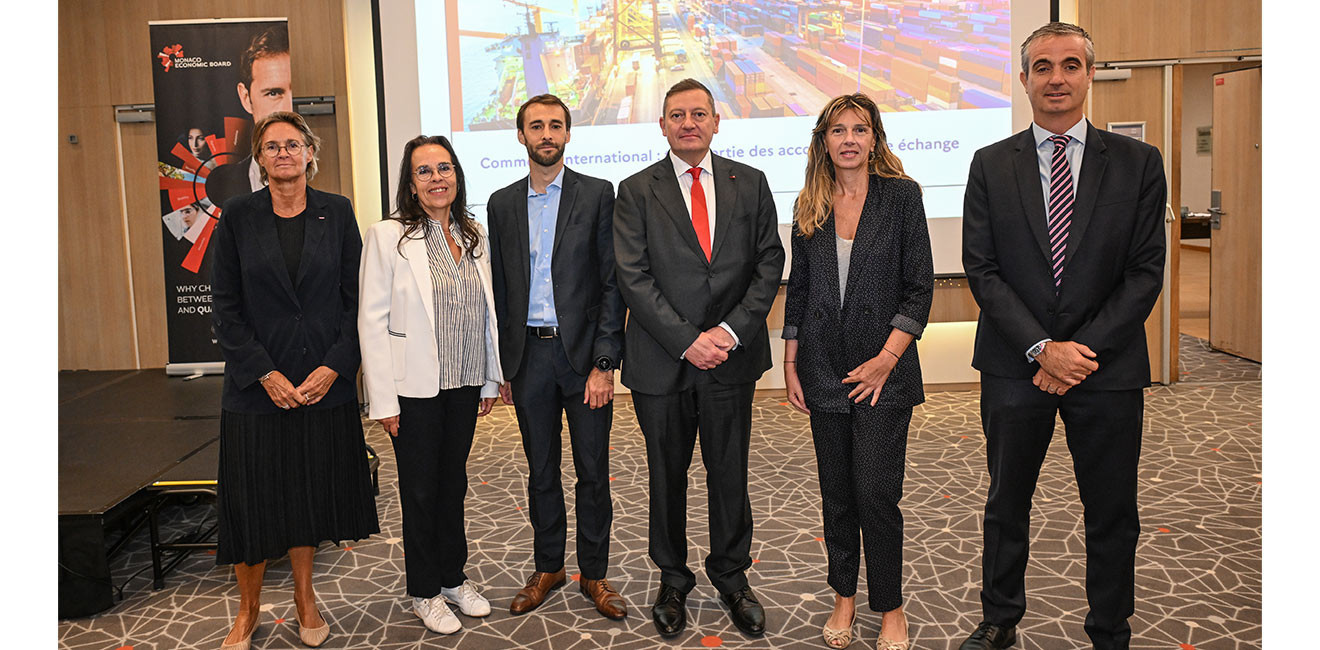
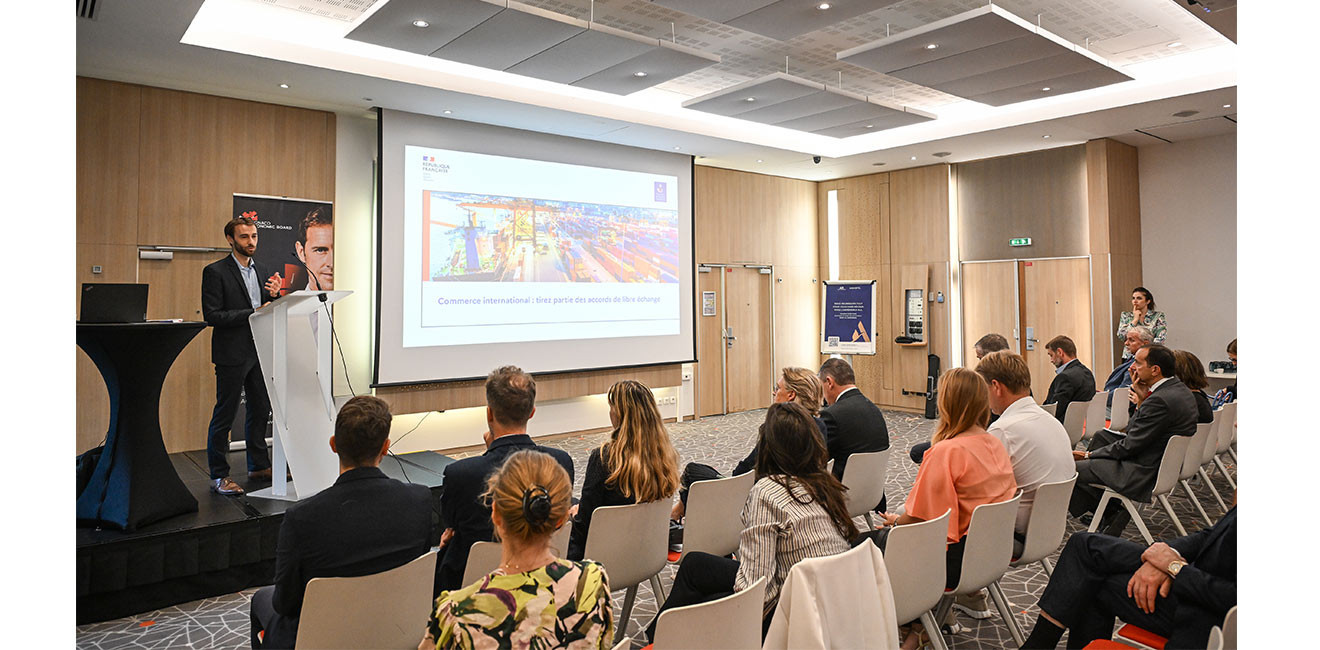
On Tuesday, 29 September, the Monaco Economic Board (MEB), the Economic Action Unit of the Nice Customs Office, and the Monaco Customs Office gathered around fifty local import-export stakeholders at the Novotel Monte-Carlo. The main focus of the discussions was on tangible growth opportunities presented by the European Union's trade policy, which is opening up to new markets.
Under the 1963 Convention, France and Monaco form a customs union: French regulations in this area therefore apply directly within the Principality. Monegasque companies are thus ideally positioned to capitalise on the extensive network of trade agreements established by the EU. This network, the largest in the world, already covers nearly half of European trade through 48 agreements signed with 79 partner countries.
During his presentation, Étienne Pollet, Business Adviser within the Nice Economic Action Unit, revisited the treaties that have recently come into force (New Zealand, Kenya, Chile) and outlined the promising prospects for those expected in 2026 and 2027. Negotiations are already quite advanced with major economic players such as MERCOSUR, Indonesia, Australia and, most notably, India, an emerging giant whose market remains highly protected. The stakes of these agreements are therefore significant, as they mainly aim to reduce or even eliminate customs duties.
However, one observation on the ground stands out: these tariff preferences remain underutilised by operators, often due to a lack of knowledge, resulting in an estimated loss of several billion euros at the European level. To assist entrepreneurs in the Principality in avoiding these missed savings, the expert stressed a fundamental but often complex customs concept: the origin of goods.
Unlike the basic concept of provenance, this genuine economic nationality is the only key to unlocking tariff benefits. Achieving it requires a mastery of strict criteria related to the nomenclature and the "sufficient transformation" of products.
To legally safeguard commercial operations and forecast costs internationally, customs authorities provide complimentary support measures valid across the EU (including Monaco). Participants notably had the opportunity to become familiar with the Binding Tariff Information (BTI) and the Binding Origin Information (BOI). Lastly, Étienne Pollet recommended that participants refer to the online platform managed by the European Commission, Access2Markets, an essential one-stop-shop for swiftly verifying the trading conditions applicable to each country.
A particularly pragmatic meeting organised to equip Monegasque companies for the expansion into new markets. Daily collaboration and ongoing liaison between Monaco Customs and the International Formalities service of the Monaco Chamber of Commerce thus constitute a valuable asset for the international growth and security of companies within the Principality.
* On 5 October, the MEB's EGM is to validate the MEB's new identity as the Chamber of Commerce of Monaco.
--------------------------------
Press contacts: Benoît Ulrich / Delphine Quilichini – presse@meb.mc
Photo credits: Sébastien Darrasse / MEB